Common Courier Mistakes and How to Avoid Them: A Complete Guide for Hassle-Free Shipping
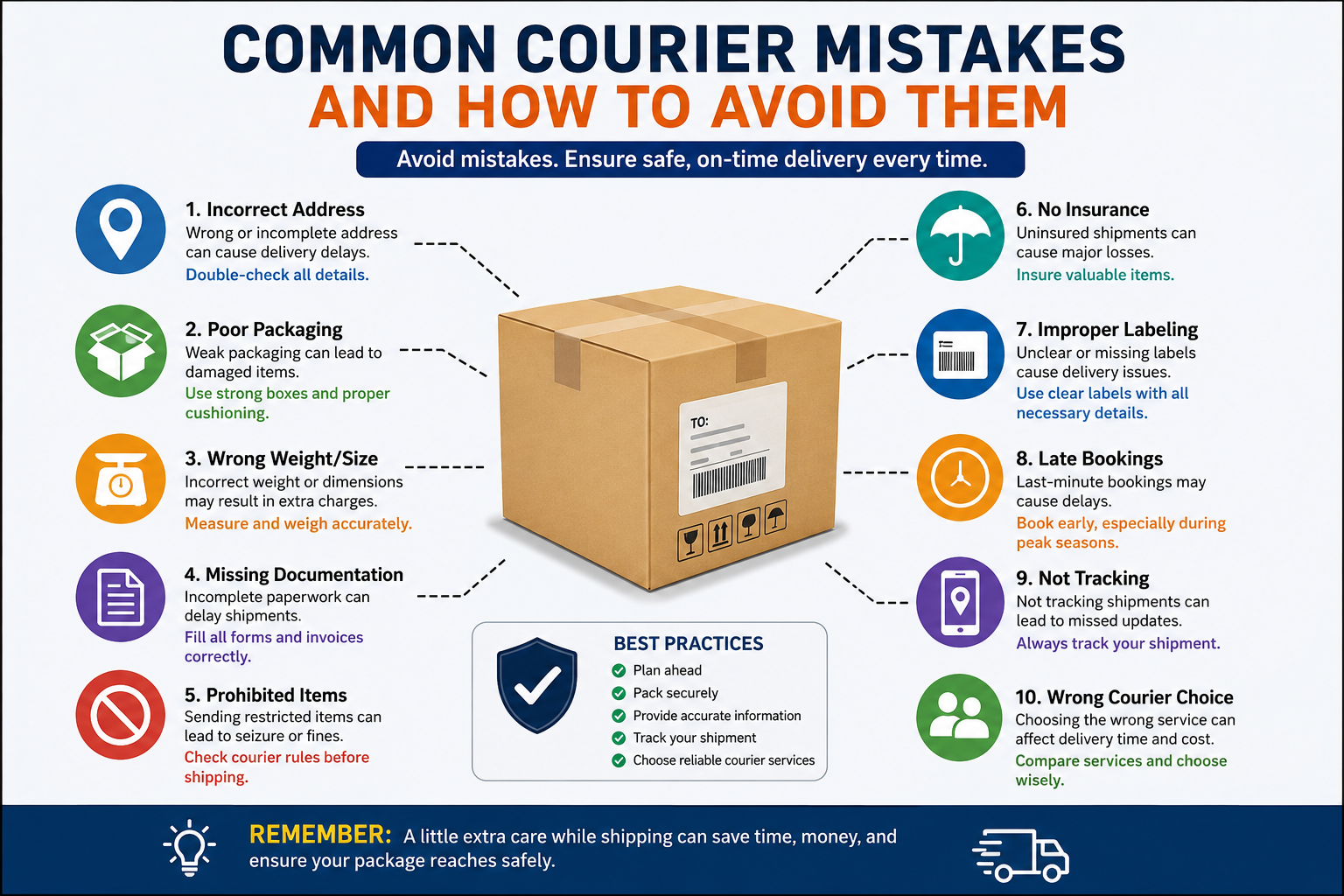
Common Courier Mistakes can lead to delays, damaged packages, and delivery issues if proper shipping practices are not followed. In today’s fast-paced world, courier services play a vital role in connecting businesses and individuals across cities, countries, and continents. Whether you are sending important documents, e-commerce orders, gifts to loved ones, or business shipments, avoiding common errors helps ensure that your package reaches its destination safely and on time.
However, many people unknowingly make common courier mistakes that lead to delays, damaged goods, extra charges, customs issues, or even lost shipments. While courier companies strive to provide reliable delivery services, the sender also shares responsibility for ensuring a smooth shipping experience.
This guide explores the most common courier mistakes people make and provides practical tips to avoid them, helping you save time, money, and unnecessary stress.
Why Avoiding Courier Mistakes Matters
A single mistake in the shipping process can cause:
- Delivery delays
- Additional shipping costs
- Package rejection
- Customs clearance issues
- Damaged products
- Customer dissatisfaction
- Business reputation loss
For businesses, repeated shipping errors can significantly impact customer trust and profitability. For individuals, mistakes can result in missed deadlines, lost gifts, or important documents arriving late.
Understanding these common pitfalls is the first step toward successful shipping.
1. Providing Incorrect or Incomplete Address Information
One of the most common courier mistakes is entering incorrect delivery details.
Even a small typo in the address can cause significant delays.
Common Address Errors
- Missing house or apartment number
- Incorrect postal/ZIP code
- Wrong street name
- Missing landmark
- Incorrect recipient phone number
- Spelling mistakes in city names
How to Avoid It
Before shipping:
✔ Verify the recipient’s complete address.
✔ Double-check the postal code.
✔ Include a contact number.
✔ Add nearby landmarks when applicable.
✔ Ask recipients to confirm their address via text or email.
Example
Instead of:
John Smith, Hyderabad
Use:
John Smith
Flat 203, Green Residency
Road No. 5, Banjara Hills
Hyderabad – 500034
Telangana, India
Mobile: +91 XXXXX XXXXX
Accurate address details dramatically reduce delivery issues.
2. Poor Packaging Practices
Many shipment damages occur because items are packed improperly.
People often assume courier companies will handle packages gently throughout transit. In reality, parcels may be moved through multiple sorting centers, vehicles, and handling processes.
Common Packaging Mistakes
- Using weak cardboard boxes
- Overstuffing packages
- Insufficient cushioning
- Not sealing packages properly
- Reusing damaged boxes
How to Avoid It
Use:
- Strong corrugated boxes
- Bubble wrap
- Foam padding
- Air cushions
- Packing paper
Seal all openings with high-quality packing tape.
For fragile items:
- Wrap each item individually.
- Fill empty spaces inside the box.
- Label clearly as “Fragile.”
Proper packaging significantly reduces damage risk.
3. Choosing the Wrong Box Size
A box that is too large or too small can create problems.
Problems with Oversized Boxes
- Increased shipping charges
- Product movement inside package
- Higher damage risk
Problems with Undersized Boxes
- Pressure on contents
- Box bursting during transit
- Insufficient cushioning
How to Avoid It
Choose packaging that:
- Fits the item comfortably
- Allows room for protective materials
- Meets courier size guidelines
The right box improves protection and can lower shipping costs.
4. Ignoring Weight and Dimension Rules
Many customers estimate package weight instead of measuring accurately.
This can result in:
- Additional charges
- Shipment delays
- Courier rejection
How to Avoid It
Always:
- Weigh packages using a digital scale
- Measure length, width, and height
- Check courier dimensional weight policies
Businesses shipping regularly should invest in reliable measuring equipment.
Accurate measurements help avoid unexpected costs.
5. Sending Prohibited or Restricted Items
Every courier company maintains a list of items that cannot be shipped or require special handling.
Common Restricted Items
- Explosives
- Flammable liquids
- Hazardous chemicals
- Certain batteries
- Perishable products
- Alcohol (depending on regulations)
- Prescription medications
- Live animals
Consequences
- Package confiscation
- Legal penalties
- Delivery rejection
- Additional inspections
How to Avoid It
Before shipping:
✔ Review courier restrictions.
✔ Check destination country regulations.
✔ Declare contents honestly.
If unsure, contact the courier provider before booking.
6. Incorrect Customs Documentation
International shipping requires proper customs paperwork.
Incomplete or inaccurate documentation is one of the biggest causes of delivery delays.
Common Customs Mistakes
- Missing invoices
- Incorrect product descriptions
- Undervaluing goods
- Wrong HS codes
- Incomplete declarations
How to Avoid It
For international shipments:
- Complete all customs forms accurately.
- Describe items clearly.
- State actual values.
- Attach invoices where required.
- Follow destination country regulations.
Accurate documentation speeds customs clearance.
7. Underinsuring Valuable Shipments
Many senders skip insurance to save money.
This can be costly if valuable items are lost or damaged.
Items Worth Insuring
- Electronics
- Jewelry
- Business equipment
- Important documents
- High-value gifts
How to Avoid It
Evaluate shipment value carefully.
If replacement costs would be significant, purchase appropriate insurance coverage.
The small additional fee often provides substantial peace of mind.
8. Failing to Label Packages Properly
A poorly labeled package can easily face routing issues.
Common Labeling Errors
- Smudged labels
- Torn shipping labels
- Handwriting that is difficult to read
- Multiple old labels on reused boxes
How to Avoid It
- Print labels whenever possible.
- Place labels on flat surfaces.
- Protect labels with clear tape.
- Remove old shipping labels completely.
Clear labeling helps ensure accurate delivery.
9. Not Tracking Shipments
Many customers send packages and assume everything will proceed smoothly.
However, tracking allows you to identify issues early.
Benefits of Tracking
- Real-time updates
- Delivery confirmation
- Early delay detection
- Better customer communication
How to Avoid Problems
Always:
- Save tracking numbers.
- Monitor shipment status regularly.
- Share tracking details with recipients.
Tracking increases transparency and reduces uncertainty.
10. Waiting Until the Last Minute to Ship
This is especially common during holidays and festive seasons.
Peak periods often result in:
- Increased parcel volume
- Limited transportation capacity
- Longer delivery times
How to Avoid It
Ship early during:
- Christmas
- New Year
- Diwali
- Eid
- Mother’s Day
- Valentine’s Day
- Black Friday sales
Businesses should forecast demand and prepare shipments in advance.
Early shipping reduces stress and improves delivery reliability.
11. Not Understanding Delivery Options
Many people automatically choose the cheapest shipping option without considering delivery requirements.
Common Shipping Options
- Same-day delivery
- Next-day delivery
- Express shipping
- Standard shipping
- Economy shipping
How to Avoid Mistakes
Match service levels to urgency.
For urgent documents:
- Use express delivery.
For non-urgent items:
- Economy options may be sufficient.
Selecting the appropriate service prevents disappointment.
12. Failing to Communicate Special Handling Requirements
Some shipments require extra care.
Examples
- Fragile glass items
- Medical equipment
- Temperature-sensitive goods
- Electronics
How to Avoid It
Clearly indicate:
- Fragile labels
- Handle with care instructions
- Orientation markings
- Temperature requirements
Proper communication improves handling throughout transit.
13. Reusing Old Packaging Without Inspection
Recycling packaging is environmentally friendly, but damaged boxes can create problems.
Risks
- Structural weakness
- Moisture damage
- Previous shipping wear
How to Avoid It
Inspect reused packaging for:
- Tears
- Dents
- Water damage
- Weak corners
Only use boxes that remain sturdy and secure.
14. Not Verifying Recipient Availability
Failed delivery attempts are a common cause of delays.
Problems
- Multiple delivery attempts
- Additional storage fees
- Return-to-sender situations
How to Avoid It
Before shipping:
- Confirm recipient availability.
- Provide delivery estimates.
- Share tracking information.
Good communication ensures successful first-attempt delivery.
15. Ignoring Return Shipping Requirements
For businesses, returns are an essential part of customer service.
Common Return Mistakes
- No return instructions
- Missing return labels
- Complicated processes
How to Avoid It
Create a simple return process:
- Clear instructions
- Easy communication channels
- Return labels when appropriate
A smooth return experience builds customer trust.
16. Choosing Courier Services Based Solely on Price
The cheapest option isn’t always the best value.
Hidden Costs of Cheap Shipping
- Delivery delays
- Poor tracking
- Limited support
- Higher damage rates
How to Avoid It
Evaluate:
- Reliability
- Delivery speed
- Customer service
- Insurance options
- Tracking capabilities
Choose a courier partner that balances affordability and service quality.
17. Forgetting to Keep Shipping Records
Documentation becomes important if issues arise.
Keep Records Of
- Shipping receipts
- Tracking numbers
- Invoices
- Insurance details
- Customs documents
Benefits
Records help resolve:
- Lost shipments
- Insurance claims
- Delivery disputes
- Customs inquiries
Digital copies are especially useful for long-term storage.
Best Practices for Successful Courier Shipping
To ensure smooth deliveries every time, follow these best practices:
Before Shipping
✓ Verify recipient details
✓ Measure and weigh accurately
✓ Use quality packaging
✓ Review courier restrictions
✓ Complete documentation correctly
During Shipping
✓ Track the shipment
✓ Communicate with recipients
✓ Save shipping records
✓ Monitor delivery progress
After Delivery
✓ Confirm successful receipt
✓ Address customer concerns promptly
✓ Review shipping performance
✓ Improve future processes
How Businesses Can Reduce Courier Errors
Businesses handling frequent shipments should establish standardized shipping procedures.
Recommended Steps
- Create packaging guidelines.
- Train staff regularly.
- Use shipping management software.
- Automate label generation.
- Verify addresses before dispatch.
- Partner with reliable courier providers.
- Conduct periodic shipping audits.
These measures improve efficiency and reduce costly mistakes.
Final Thoughts
Courier services have become an essential part of modern life, supporting everything from online shopping and business operations to personal deliveries across the globe. While courier companies work hard to ensure safe and timely transportation, many shipping problems originate from preventable sender mistakes.
Incorrect addresses, poor packaging, missing documentation, inadequate insurance, and failure to follow courier guidelines can all lead to delays, additional costs, or damaged shipments. Fortunately, most of these issues can be avoided through careful planning and attention to detail.
Whether you are an individual sending a gift overseas or a business managing hundreds of deliveries each month, following best practices can dramatically improve shipping success. Taking a few extra minutes to verify information, package items properly, and choose the right courier service can save significant time, money, and frustration in the long run.
By understanding and avoiding these common courier mistakes, you can ensure that your packages reach their destination safely, efficiently, and without unnecessary complications.