
How Do You Calculate Shipping Costs (Weight, Distance, Size)? – Complete Guide
Shipping costs can sometimes feel confusing, especially when prices vary between courier companies. Whether you are an individual sending a parcel or a business handling regular shipments, understanding how shipping costs are calculated can help you save money and make better decisions.
In cities like Guntur and Hyderabad, courier services follow similar pricing structures based on key factors such as weight, distance, and package size. In this guide, we’ll break down everything you need to know in simple terms.
📦 Why Understanding Shipping Costs Is Important
Knowing how shipping charges are calculated helps you:
- Avoid overpaying
- Choose the right courier service
- Plan your shipping budget
- Optimize packaging
For businesses, it directly affects profit margins and customer satisfaction.
⚖️ 1. Weight – The Most Important Factor
Weight plays the biggest role in determining shipping costs. But here’s something many people don’t know—courier companies consider two types of weight.
✔ Actual Weight
This is the real weight of your parcel measured on a scale.
Example:
If your parcel weighs 3 kg, the actual weight is 3 kg.
✔ Volumetric Weight (Dimensional Weight)
This is based on the size of your package, not its actual weight.
📏 Formula:
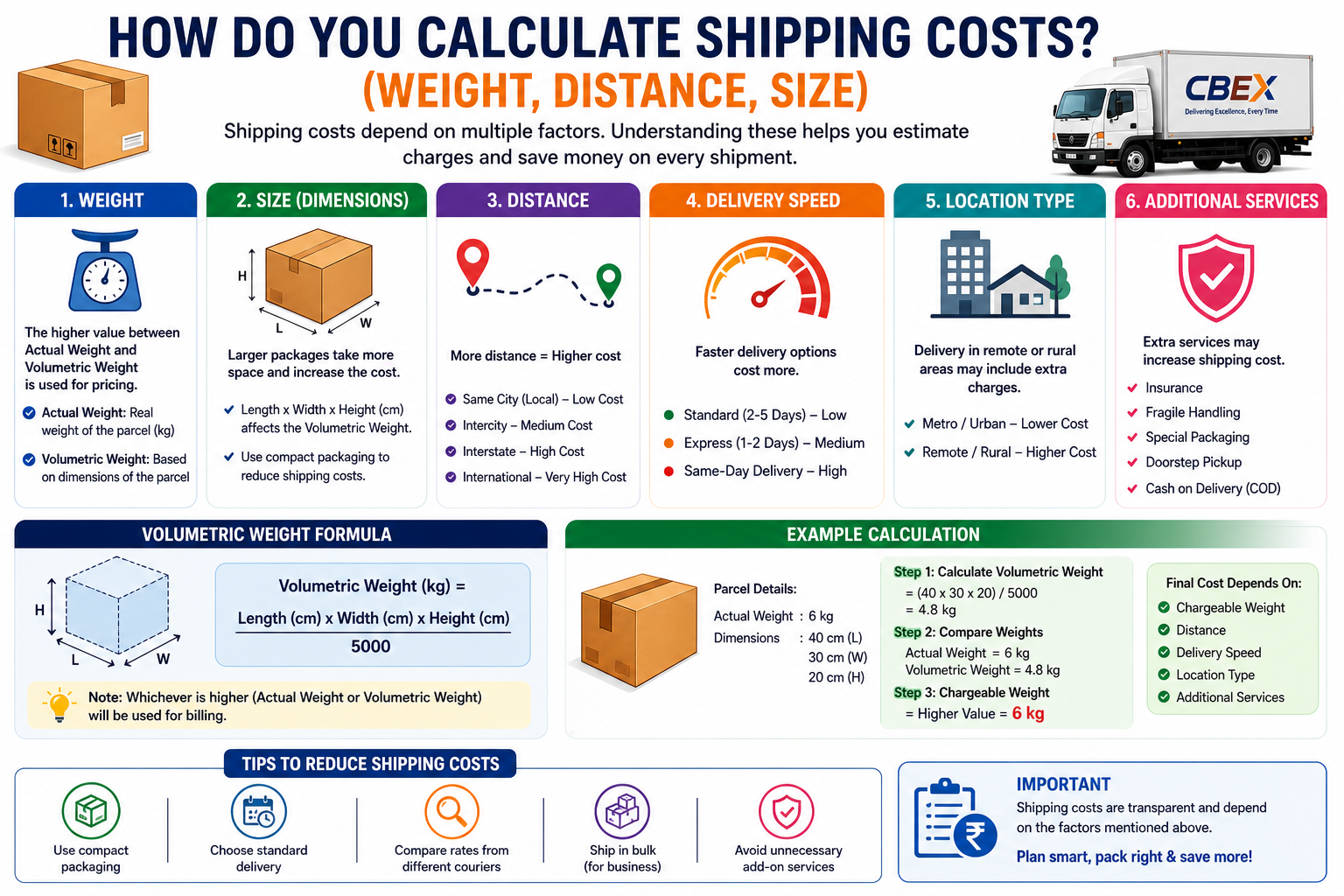
Volumetric Weight = (Length × Width × Height) ÷ 5000
👉 Measurements are usually in centimeters.
📊 Example:
- Length = 50 cm
- Width = 40 cm
- Height = 30 cm
Volumetric Weight = (50 × 40 × 30) ÷ 5000 = 12 kg
Even if the actual weight is 5 kg, you’ll be charged for 12 kg because the package takes more space.
🎯 Key Rule:
👉 Whichever is higher (actual weight or volumetric weight) is used for billing.
📦 2. Package Size (Dimensions)
Size directly affects shipping cost because larger packages take up more space in transport vehicles.
📌 Why Size Matters:
- Bulky packages reduce vehicle capacity
- More space = higher logistics cost
✔ Cost Impact:
- Small, compact packages = cheaper
- Large, bulky packages = expensive
💡 Pro Tip:
Always use tight, compact packaging to reduce volumetric weight.
📍 3. Distance Between Pickup & Delivery
Distance is another major factor in shipping cost.
📊 Cost Based on Distance:
- Local delivery (same city) → Lowest cost
- Intercity delivery → Medium cost
- Interstate delivery → Higher cost
- International shipping → Highest cost
📦 Example:
- Shipping within Guntur → Low cost
- Guntur to Hyderabad → Medium cost
- India to USA → High cost
🚚 4. Delivery Speed
The faster you want your parcel delivered, the more you pay.
📊 Delivery Options:
| Type | Delivery Time | Cost |
|---|---|---|
| Standard | 2–5 days | Low |
| Express | 1–2 days | Medium |
| Same-Day | Same day | High |
🎯 Key Insight:
Faster delivery requires:
- Priority handling
- Faster transport
- More resources
👉 That’s why it costs more.
🌍 5. Delivery Location Type
Not all locations cost the same.
✔ Metro Cities:
- Lower cost
- Faster delivery
✔ Remote Areas:
- Higher cost
- Limited service availability
Courier companies may add remote area surcharges.
🛡️ 6. Additional Services That Affect Cost
Extra services can increase your shipping price.
Common Add-Ons:
- Insurance coverage
- Fragile item handling
- Special packaging
- Doorstep pickup
- Cash on Delivery (COD)
📌 Example:
If you insure a high-value item, the cost increases slightly for added protection.
📦 7. Type of Shipment
Different types of shipments have different pricing.
✔ Documents:
- Lightweight
- Cheaper
✔ Parcels:
- Heavier
- Cost depends on weight and size
✔ Bulk Shipments:
- Discounted rates
💰 Sample Shipping Cost Calculation
Let’s understand with a simple example.
📦 Parcel Details:
- Weight: 6 kg
- Dimensions: 40 × 30 × 20 cm
Step 1: Calculate Volumetric Weight
(40 × 30 × 20) ÷ 5000 = 4.8 kg
Step 2: Compare Weights
- Actual weight = 6 kg
- Volumetric weight = 4.8 kg
👉 Chargeable weight = 6 kg
Step 3: Add Distance & Speed
- Intercity shipping
- Express delivery
👉 Final cost = Based on 6 kg + distance + speed
📊 Summary of Cost Factors
| Factor | Impact on Cost |
|---|---|
| Weight | High |
| Size | High |
| Distance | High |
| Speed | Medium–High |
| Location | Medium |
| Extra Services | Variable |
💡 Tips to Reduce Shipping Costs
✔ Use Smaller Packaging
Avoid empty space in boxes.
✔ Choose Standard Delivery
Use express only when needed.
✔ Compare Courier Services
Different companies offer different rates.
✔ Ship in Bulk
Businesses can save more with bulk shipping.
✔ Avoid Unnecessary Add-Ons
Use insurance only when needed.
⚠️ Common Mistakes to Avoid
- Ignoring volumetric weight
- Using oversized packaging
- Choosing fastest delivery unnecessarily
- Not checking hidden charges
🚀 Future of Shipping Cost Calculation
Courier pricing is evolving with technology.
Trends:
- AI-based pricing models
- Real-time cost calculators
- Automated logistics systems
This makes pricing more accurate and transparent.
🏆 Conclusion
Shipping cost calculation may seem complex, but it mainly depends on a few key factors—weight, size, distance, and delivery speed. Once you understand how these elements work together, you can make smarter decisions and reduce your shipping expenses.
Whether you’re sending a small parcel or managing large shipments, knowing how pricing works gives you better control over your logistics and budget.
❓ FAQs
1. What is volumetric weight?
It is the weight calculated based on package size.
2. Which weight is used for billing?
The higher value between actual and volumetric weight.
3. Why is shipping expensive for large packages?
Because they take more space in transport.
4. Does faster delivery cost more?
Yes, express and same-day deliveries are more expensive.
5. How can I reduce shipping costs?
Use compact packaging and choose standard delivery.