How to Pack Parcels Safely for Shipping: A Complete Guide
Shipping a parcel may seem simple, but proper packaging is essential to ensure that your items arrive safely and in perfect condition. Whether you’re sending personal belongings, important documents, gifts, e-commerce orders, or fragile products, the way you pack your parcel plays a major role in preventing damage during transit.
Every day, packages travel through sorting centers, delivery vehicles, cargo facilities, and long transportation routes. Without proper packaging, shipments can be exposed to impacts, vibrations, pressure, moisture, and handling risks. That’s why understanding safe packing techniques is important for both individuals and businesses.
At CBEX Courier, Cargo & Logistics, customers are encouraged to follow packaging best practices to ensure secure and hassle-free deliveries.
📦 Why Proper Packaging Matters
Proper packaging provides protection throughout the shipping journey.
Benefits of Safe Packaging
- Prevents product damage
- Reduces delivery issues
- Improves customer satisfaction
- Protects fragile items
- Minimizes shipping claims
- Ensures smooth transportation
Well-packaged parcels move through courier networks more efficiently and safely.
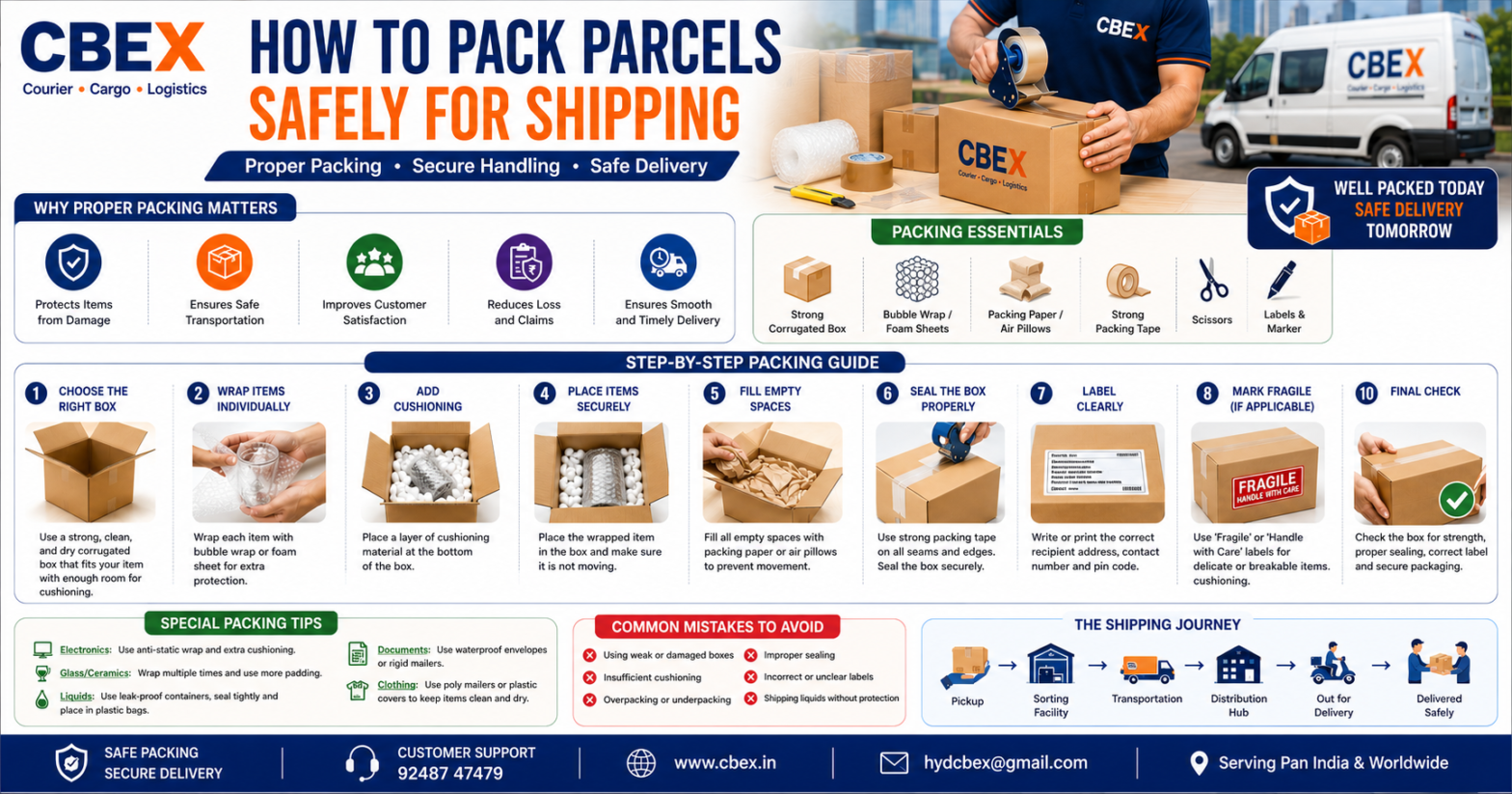
🚚 Understanding the Shipping Journey
Before packing a parcel, it is helpful to understand what happens during transit.
A shipment may pass through:
- Pickup locations
- Sorting facilities
- Delivery vehicles
- Cargo terminals
- Distribution hubs
- Final delivery routes
During this process, packages may be stacked, moved, loaded, unloaded, and transported multiple times.
Proper packaging helps protect items from these normal handling conditions.
📦 Choose the Right Box
The first step in safe packaging is selecting an appropriate box.
Use a Strong Corrugated Box
Corrugated cardboard boxes are commonly used because they provide durability and protection.
Avoid Damaged Boxes
Do not reuse boxes that are:
- Torn
- Crushed
- Wet
- Weak
Damaged packaging can fail during transportation.
Select the Correct Size
Choose a box that:
- Fits the item properly
- Allows room for cushioning materials
- Prevents excessive movement
Oversized boxes may increase the risk of damage.
🛡️ Use Adequate Cushioning Materials
Cushioning protects items from shocks and impacts.
Common Cushioning Materials
- Bubble wrap
- Foam sheets
- Packing peanuts
- Air pillows
- Crumpled packing paper
The goal is to keep the item securely positioned inside the box.
🔒 Wrap Fragile Items Individually
Fragile items require additional protection.
Examples
- Glassware
- Electronics
- Ceramics
- Decorative items
- Laboratory equipment
Wrap each item separately before placing it inside the shipping box.
This prevents direct contact between items and reduces breakage risk.
📱 Protect Electronic Devices
Electronics are sensitive to impact and static damage.
Best Practices
- Use anti-static packaging when possible
- Wrap devices in bubble wrap
- Secure accessories separately
- Use additional padding around corners
Proper protection helps prevent costly damage.
🍽️ Packing Glass and Ceramic Items
Glass products require extra care.
Recommended Steps
- Wrap each item individually.
- Use multiple layers of bubble wrap.
- Fill empty spaces with cushioning material.
- Use a sturdy box.
Adding a “Fragile” label can also help inform handlers.
📄 How to Pack Documents Safely
Important documents should remain flat and protected.
Suitable Packaging
- Document envelopes
- Waterproof sleeves
- Rigid cardboard mailers
Examples include:
- Passports
- Certificates
- Legal documents
- Contracts
Avoid folding important paperwork unnecessarily.
📦 Fill Empty Spaces
One common packaging mistake is leaving empty space inside the box.
Empty spaces allow items to move during transportation.
Solution
Use:
- Bubble wrap
- Foam inserts
- Packing paper
A properly packed box should prevent internal movement when gently shaken.
🚫 Avoid Overpacking
Overpacking can create problems as well.
Boxes that are:
- Too full
- Bulging
- Difficult to close
may burst during transit.
Balance protection with proper box sizing.
📍 Seal Packages Properly
Strong sealing is essential for package security.
Use Quality Packing Tape
Choose durable shipping tape designed for transportation use.
Recommended Method
Apply tape:
- Across the center seam
- Along the edges
- Across box openings
This technique strengthens the package structure.
🏷️ Label Packages Clearly
Accurate labeling helps ensure successful delivery.
Include
- Recipient name
- Full delivery address
- Contact number
- Postal code
Clear labels reduce the risk of routing errors.
🌧️ Protect Against Moisture
Some shipments may encounter humid conditions or rain.
Waterproof Protection Tips
- Use plastic wrapping
- Place documents in waterproof sleeves
- Seal liquids carefully
Moisture protection is especially important for international shipments.
🧴 Shipping Liquids Safely
Liquids require additional precautions.
Best Practices
- Use leak-proof containers
- Seal lids securely
- Place containers in plastic bags
- Add absorbent materials
These measures help prevent leakage and contamination.
👕 Packing Clothing and Textiles
Clothing is generally easier to ship but still benefits from proper packaging.
Recommended Materials
- Poly mailers
- Plastic garment bags
- Corrugated boxes
Ensure clothing remains clean and dry during transit.
🛒 Packaging for E-Commerce Businesses
Online sellers ship products daily and must prioritize packaging quality.
Benefits of Professional Packaging
- Fewer damaged deliveries
- Better customer experience
- Reduced returns
- Improved brand reputation
Consistent packaging standards contribute to long-term business success.
🌍 International Shipping Packaging Tips
International shipments often travel longer distances and pass through customs inspections.
Additional Considerations
- Use stronger packaging materials
- Include required documentation
- Follow destination country regulations
- Secure contents carefully
Proper preparation helps avoid delays and damage.
🚛 Packaging Heavy Items
Heavy shipments require reinforced packaging.
Recommendations
- Double-wall boxes
- Reinforced tape
- Strong internal support
- Weight-appropriate packaging
Heavy items can damage weak boxes during transit.
📦 Double Boxing for Extra Protection
Double boxing is useful for fragile or valuable shipments.
How It Works
- Pack the item in an inner box.
- Add cushioning around the inner box.
- Place it inside a larger outer box.
This provides additional protection against impact.
🔍 Inspect Before Shipping
Before handing over your parcel:
Checklist
✔ Box is sturdy
✔ Contents are secure
✔ Empty spaces are filled
✔ Labels are accurate
✔ Tape is properly applied
✔ Fragile items are protected
A final inspection helps prevent shipping issues.
❌ Common Packaging Mistakes to Avoid
Using Weak Boxes
May collapse during transit.
Insufficient Cushioning
Increases damage risk.
Poor Sealing
Can cause package openings.
Incorrect Labels
May delay deliveries.
Overloaded Boxes
Can tear or break.
Avoiding these mistakes improves shipment safety.
📈 Benefits of Safe Packaging
Proper packaging delivers several advantages:
Reduced Damage
Items arrive safely.
Better Customer Experience
Recipients receive products in good condition.
Lower Costs
Fewer replacements and claims.
Faster Deliveries
Packages move smoothly through logistics networks.
Improved Brand Image
Professional packaging reflects professionalism.
🚀 The Role of Courier Partners
Reliable courier companies complement good packaging practices with:
- Professional handling
- Efficient transportation
- Real-time tracking
- Secure delivery processes
Together, proper packaging and reliable logistics help ensure successful deliveries.
🏁 Conclusion
Safe packaging is one of the most important steps in the shipping process. Whether sending documents, electronics, fragile items, clothing, or commercial products, using the right packaging materials and techniques helps protect shipments throughout transit.
By choosing strong boxes, adding proper cushioning, sealing packages securely, and labeling accurately, customers can significantly reduce the risk of damage and delays. Combined with dependable courier services, proper packaging ensures a safer, smoother, and more reliable shipping experience.