How to Reduce International Courier Costs in 2026
Sending parcels internationally can be expensive when you do not understand how courier charges are calculated. However, choosing the right service, optimizing packaging, preparing documents correctly, and planning shipments can help reduce unnecessary costs without compromising delivery speed.
If you are looking for ways to reduce international courier costs, the goal should not simply be to choose the cheapest courier service. Instead, focus on getting the best combination of price, delivery speed, tracking, security, and reliability.
In 2026, international shipping costs can depend on several factors, including actual weight, volumetric weight, destination, package dimensions, delivery speed, customs requirements, duties, taxes, and additional services.
What Determines International Courier Costs?
Before learning how to save money, it is important to understand what affects the final shipping price.
Common factors include:
- Actual weight of the parcel
- Volumetric or dimensional weight
- Package dimensions
- Destination country and postcode
- Delivery speed
- Type of goods
- Packaging
- Customs documentation
- Duties and taxes
- Special handling requirements
- Remote-area or other applicable surcharges
For example, a large but lightweight parcel can sometimes cost more than a compact, heavier package because courier pricing may consider the amount of space the shipment occupies.
Understanding these factors is the first step toward reducing your international courier expenses.
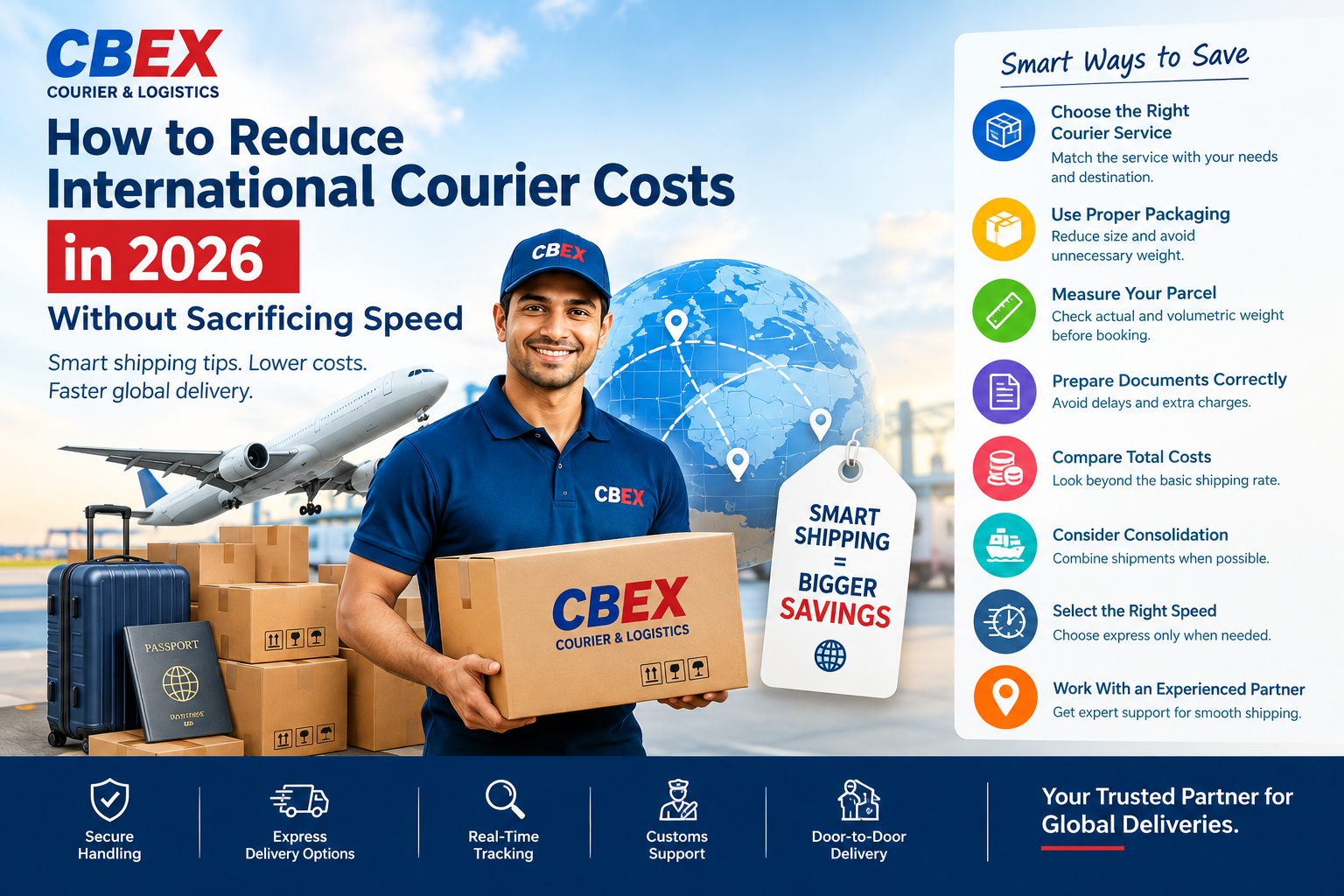
1. Choose the Right Courier Service
One of the simplest ways to control international shipping costs is to select a service that matches your shipment requirements.
You may not need the same service for every parcel. An urgent business document may require express delivery, while a non-urgent personal package could use a more economical option.
Before booking, compare:
- Standard and express services
- Delivery timelines
- Weight limits
- Destination coverage
- Tracking facilities
- Customs support
- Additional charges
The cheapest advertised rate may not always provide the best overall value. A reliable shipping partner can help you avoid preventable delays, documentation mistakes, and unexpected costs.
2. Reduce Volumetric Weight Through Better Packaging
Packaging is one of the biggest opportunities for reducing international courier costs.
Courier companies may calculate shipping charges using either actual weight or volumetric weight, depending on the service and which applicable measure is higher. This means an oversized box can increase your shipping cost even when the contents are relatively light.
To optimize your packaging:
- Select a box that fits the contents properly.
- Avoid unnecessarily large cartons.
- Use lightweight but durable packaging.
- Minimize excessive filler material.
- Measure the package after packing.
- Protect fragile products without adding unnecessary volume.
Using appropriately sized packaging can reduce wasted space while still protecting your shipment.
3. Measure Your Parcel Before Booking
Do not rely only on the weight shown on your weighing scale.
Measure the length, width, and height of the completed package. Then check how your courier provider calculates volumetric weight.
This is particularly important for clothing, household items, handicrafts, gifts, samples, and other products that may occupy considerable space compared with their actual weight.
Accurate measurements also help you receive a more realistic shipping quotation before sending the parcel. DHL’s 2026 guidance similarly highlights accurate measurement as an important part of controlling international shipping costs.
4. Prepare Customs Documents Correctly
Incorrect or incomplete documentation can cause delays and may result in additional costs.
For international shipments, provide accurate information about the contents, value, quantity, and purpose of the shipment. Depending on the shipment, documents may include commercial invoices, shipping labels, customs information, and appropriate product classifications.
Correct documentation helps the shipment move through customs more efficiently. DHL’s current guidance specifically highlights accurate product descriptions, HS codes, declared values, and commercial invoices as important customs information.
Before handing over your parcel, check that all required information is complete and consistent.
5. Avoid Incorrect Product Descriptions
A vague product description can create unnecessary questions during customs processing.
Instead of writing a general description such as “items” or “gifts,” provide an accurate description appropriate to the actual contents and documentation requirements.
Clear information helps customs authorities and courier teams understand what is being shipped.
For commercial shipments, ensure that product descriptions, declared values, quantities, and supporting documents are accurate.
6. Consolidate Shipments When Practical
Businesses that regularly send several small international shipments may be able to reduce costs by consolidating shipments when appropriate.
Instead of sending multiple separate consignments, combining eligible goods into a single shipment can sometimes reduce repeated handling or minimum shipment charges.
However, consolidation is not suitable for every situation. Urgent orders, different destinations, customs requirements, or customer-specific delivery deadlines may require separate shipments.
For businesses, compare the cost of individual shipments against consolidated options before deciding.
7. Select Speed Based on Actual Urgency
Express delivery is valuable when time matters, but not every shipment requires the fastest available service.
Before choosing an express option, ask yourself:
Does this shipment really need the fastest delivery available?
If the parcel is time-sensitive, express shipping may provide better value because it reduces transit time. For routine shipments, another available service may be more economical.
The key is to balance delivery speed and shipping cost rather than automatically selecting the fastest option.
8. Compare the Total Shipping Cost
When comparing international courier companies, do not compare only the basic shipping rate.
Look at the complete cost associated with the shipment. Depending on the service, additional charges may relate to fuel, remote-area delivery, special handling, customs, duties, taxes, or optional services.
Ask for a clear quotation and understand what is included before confirming the shipment.
A slightly higher base rate may sometimes provide better overall value if it includes useful services and reduces the likelihood of unexpected charges.
9. Choose the Right Packaging Material
Good packaging should protect your shipment without unnecessarily increasing its weight or dimensions.
For example, using a heavy box with excessive protective material may increase the overall shipping weight. On the other hand, insufficient packaging can expose the contents to damage.
The ideal approach is to use packaging that is:
- Strong enough for international transportation
- Appropriate for the product
- Lightweight where practical
- Correctly sized
- Properly sealed and labelled
Efficient packaging can support both cost control and safe delivery.
10. Use Shipment Tracking
Tracking may not directly reduce the courier charge, but it can improve shipment visibility and help businesses manage their deliveries more efficiently.
For businesses, tracking information can help customer service teams answer delivery questions, monitor shipments, and identify potential issues earlier.
When selecting an international courier partner, consider whether the service provides reliable tracking and shipment updates.
11. Work With an Experienced International Courier Partner
Choosing an experienced courier partner can help you make better shipping decisions.
An experienced provider can guide you on:
- Appropriate shipping services
- Packaging requirements
- Documentation
- Customs procedures
- Shipment tracking
- Delivery options
- Cargo requirements
This can be particularly useful for businesses that regularly ship internationally.
Rather than choosing a provider based only on the lowest price, consider the complete service experience and long-term shipping value.
12. Consider Cargo Services for Larger Shipments
Not every shipment should be treated as a standard parcel.
If you regularly send larger commercial consignments, cargo or freight services may be more suitable than sending multiple individual parcels.
CBEX provides Cargo Services for international shipments requiring customs clearance, along with other courier and logistics solutions. Choosing the appropriate service based on shipment size and requirements can help businesses manage international logistics more effectively.
How CBEX Helps With International Shipping
CBEX provides a range of international courier and logistics services for individuals and businesses. Its services include International Express, Cargo Service, Import Express, International Import Express, International Diplomat Service, and Re-Mailing Service.
Depending on the shipment and selected service, customers can also receive support with packaging, documentation, customs procedures, shipment tracking, and door-to-door delivery.
For businesses, CBEX can support different types of international shipments, including documents, parcels, gifts, samples, commercial shipments, and bulk requirements.
The right service depends on the shipment’s weight, dimensions, destination, urgency, and type of goods.
International Courier Cost-Saving Checklist
Before sending your next international parcel, check the following:
✓ Measure the package
Know the exact length, width, height, and weight.
✓ Optimize the packaging
Use a properly sized and durable box.
✓ Compare services
Choose the service that matches your delivery deadline.
✓ Prepare documents correctly
Check descriptions, values, invoices, and required customs information.
✓ Check additional charges
Understand applicable duties, taxes, surcharges, and special handling costs.
✓ Consolidate when practical
For suitable business shipments, compare consolidated and individual shipping options.
✓ Track your shipment
Use tracking to monitor the parcel throughout its journey.
✓ Choose a reliable courier partner
Consider service quality, support, tracking, and overall value—not just the lowest quoted price.
Final Thoughts
Learning how to reduce international courier costs does not mean choosing the cheapest available shipping option. The smarter approach is to control avoidable expenses while maintaining reliable delivery.
Start by using the right-sized packaging, measuring your parcel accurately, preparing customs documentation correctly, comparing shipping services, consolidating suitable shipments, and selecting delivery speeds based on actual urgency.
For businesses and individuals, an experienced international courier partner can also provide valuable support with documentation, customs, tracking, packaging, and service selection.
With proper planning and the right logistics strategy, you can reduce international courier costs in 2026 without sacrificing speed, security, or delivery reliability.